
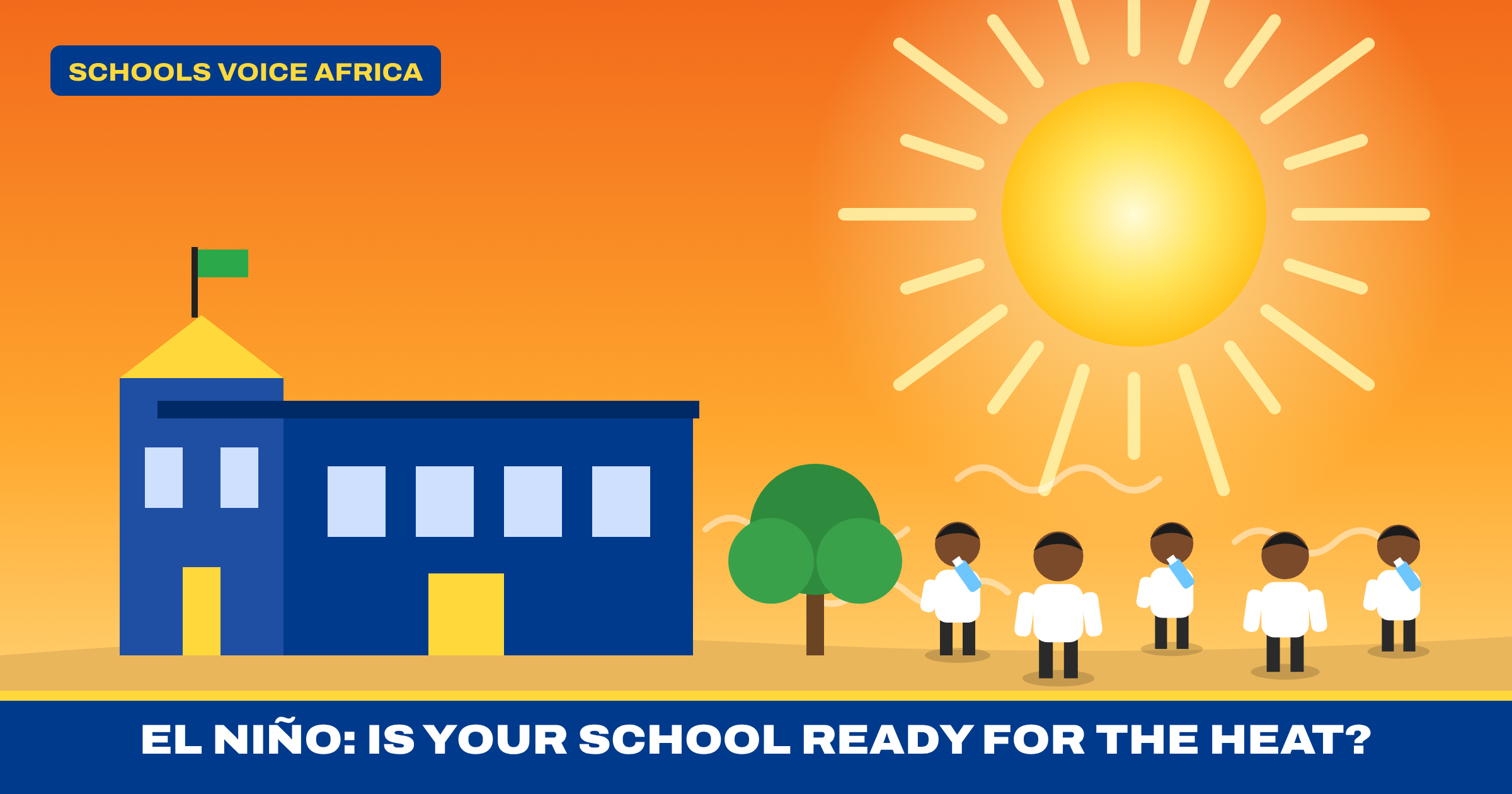
Warnings about El Niño are now being issued, and with them comes the prospect of hotter weather. Every school in Port Harcourt and across Nigeria should be asking the same question: what are we doing to make sure this does not harm the children in our care?
Children feel heat more quickly than adults do, and the youngest learners and those already vulnerable feel it most. A classroom that is only uncomfortable for a teacher can be a real health risk for a three-year-old in a full uniform.
Government has its part to play, and we should hold it to that. But learners are in our classrooms every day, and schools do not have to wait for instructions to protect them. School managements and teachers should read these warnings as a call to action.
Will learners still wear blazers and sweatshirts?
In many schools, blazers and sweatshirts are part of the uniform whatever the weather. In hot weather, that rule deserves a second look. Schools can relax the requirement for blazers and sweatshirts, allow lighter clothing, and tell parents early so that no family is caught out. A clear notice from the school removes the guesswork and the arguments at the gate.
How will schools keep learners hydrated?
Water should be easy to reach. Schools can let every child carry a water bottle, place drinking water points close to classrooms, and ask parents to send a bottle every day. Young children often forget to drink, so teachers need to remind them.
Schools should also consider introducing water breaks. A short, scheduled break between lessons, after break time and after PE means no child has to wait until they are thirsty, and no child is afraid to ask.
What changes in PE time?
Physical education is where children are most exposed to the heat. Schools can hold PE early in the morning or late in the afternoon, move it into the shade or indoors on the hottest days, and choose lighter, shorter activities. Rest and water should be allowed during and after every session.
What should teachers watch for?
Teachers should know the signs that a child is struggling with the heat: headache, dizziness, unusual tiredness, a very red face, or a child who suddenly stops playing. A child who looks unwell should rest in a cool, shaded place, drink water, and be reported to the school nurse or management. The parents should be called.
Parents are part of the plan
None of this works without parents. Schools should tell them the plan early: what the uniform rules are, how water will be handled, what changes in PE, and what to do if a child is unwell. Parents, for their part, can send a water bottle every day, ask the school what its plan is, and tell the school when a child is not feeling well.
The question for every school
The warnings are here. The children are in class. The only open question is what each school will do about it, and parents are entitled to ask. Is your school ready for the heat?
Dr. Grace Phillips-Ayonuwe is an education consultant based in Port Harcourt and the founder of Schools Voice Africa.