
At 16, Nigerian Student Belusochim Ugochukwu Is Already Building With AI and Robotics at Apple
At 16, Nigerian student Belusochim Ugochukwu completed a 13-week robotics and machine learning internship at Apple—a journey built through years of competitions, mathematics, and hands-on portfolio building.
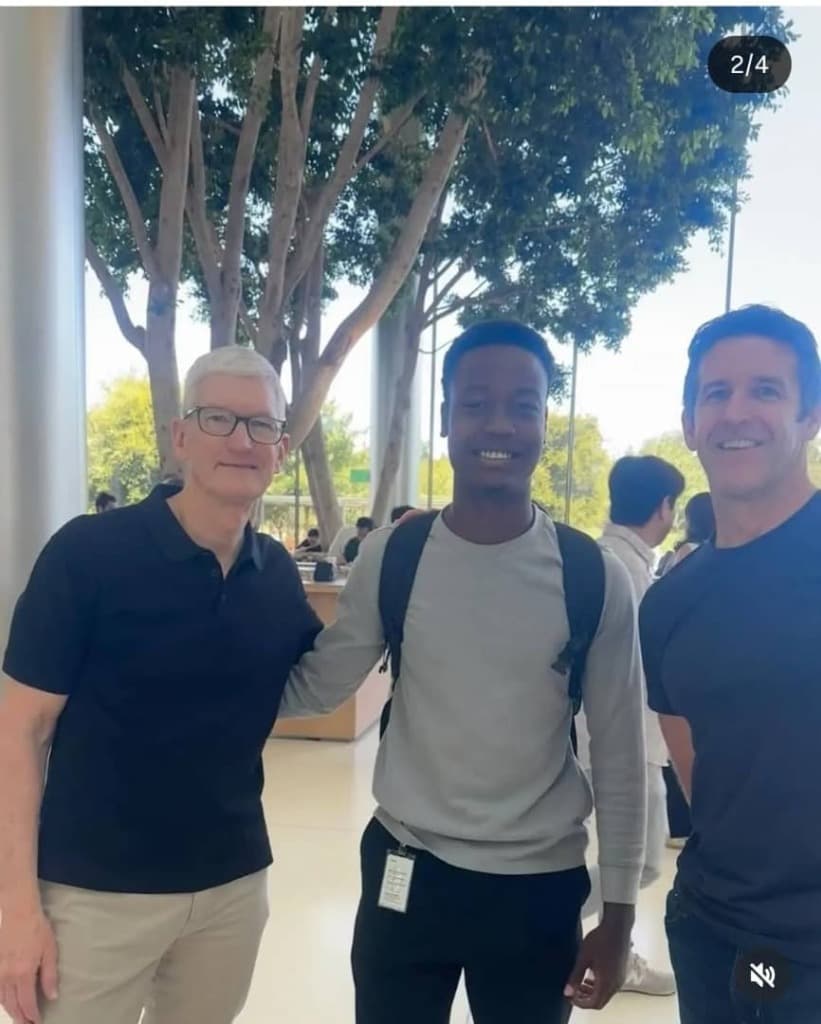
At 16, many students are still exploring the subjects they enjoy and thinking about what they might want to do in the future. For Nigerian student Belusochim Ugochukwu, that exploration has already taken him into machine learning, robotics, computer vision and an internship at Apple.
Ugochukwu recently shared that he had completed a 13-week summer internship at Apple, where he worked on computer vision for robots involved in sorting electronic waste in recycling facilities. He described the experience as an opportunity to work alongside engineers and contribute to technology connected to Apple's environmental goals.
His story has attracted attention not simply because he is young, but because of the breadth of work he had already undertaken before reaching Apple.
The Journey Started Early
According to reports about his journey, Ugochukwu began competing in mathematics and physics Olympiads from around the age of 11.
He subsequently explored artificial intelligence, robotics and software development, including work on a prototype robotic wheelchair and an education-technology venture. Reports also say that he moved from Nigeria to the United States at 14, completed high school and began college at 15.
That trajectory is important because his Apple opportunity did not appear out of nowhere. His public professional profile shows a portfolio built through projects, competitions, research and experimentation across several areas of technology.
Then Came Apple
In May 2026, Ugochukwu announced that he would be joining Apple's Environment & Supply Chain Innovation organisation as a Machine Learning Intern.
At the time, he said his work would involve product-recycling operations and contribute to Apple's goal of reaching net-zero emissions by 2030.
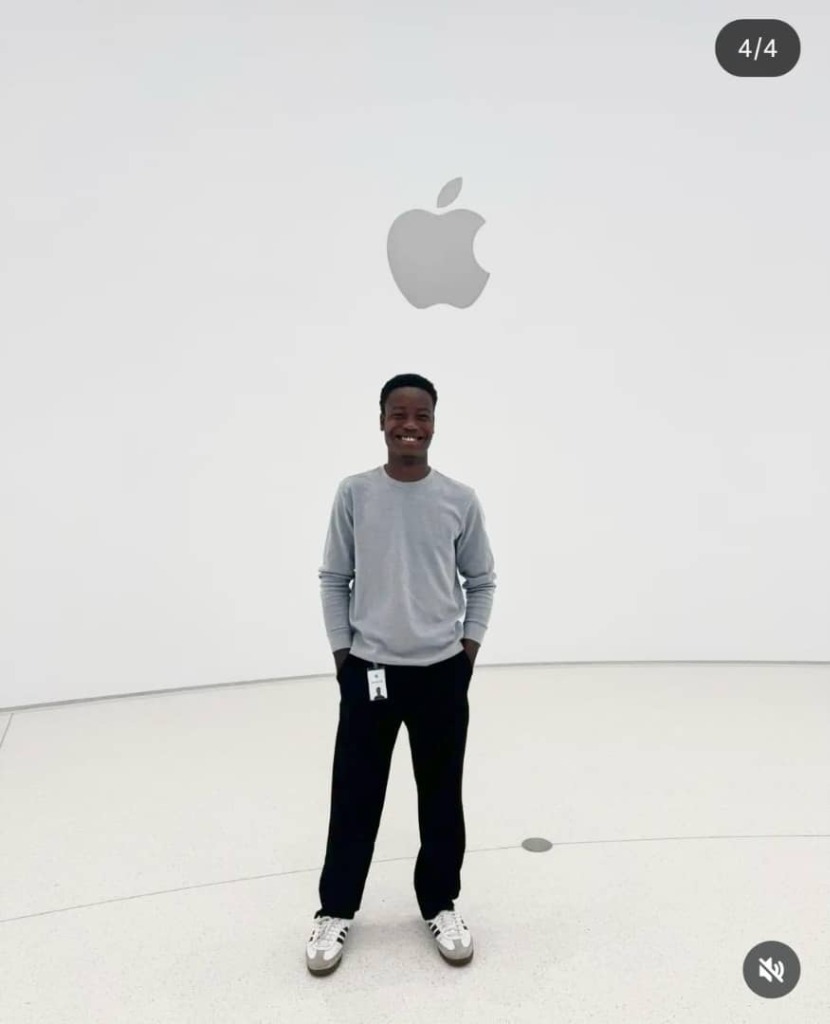
His subsequent update provided more detail about the experience. He said that during the 13-week internship, he worked on computer vision for robots that help sort electronic waste in recycling facilities.
Computer vision is a branch of artificial intelligence that enables computers and machines to interpret information from images and video. When combined with robotics, it can allow machines to identify objects and make decisions about how to interact with them. In this case, that technology intersects with an environmental problem: recovering useful materials from electronic waste.
But the Most Interesting Part May Not Be Apple
The headline is obviously Apple. It is one of the world's most recognised technology companies, and seeing a 16-year-old Nigerian student working there is remarkable.
But for educators, there is another part of the story worth paying attention to. Look at what happened before the internship:
- Mathematics and Physics Olympiads
- Computer Programming & Coding
- AI Research & Machine Learning Models
- Robotics Prototypes
- STEM Competitions
- Independent Project-building & Entrepreneurship
These experiences created a portfolio around his interests. And that raises an important question for schools: Are we giving students enough opportunities to build?
Beyond the Classroom
A student's ability cannot always be captured by a test score.
A student who is fascinated by robotics may need opportunities to build a robot. A child interested in artificial intelligence may need access to programming and computational thinking. A student who loves science may need opportunities to conduct experiments rather than simply memorise scientific definitions.
Competitions can also play a role because they expose students to problems that require application rather than recall.
"This does not mean examinations are unimportant. It means education can become richer when students have opportunities to move from knowing to doing."
And that conversation is particularly relevant now as Nigerian schools adjust to growing emphasis on competencies, creativity, problem-solving, digital skills and other capabilities needed beyond the classroom.
His Story Also Challenges How We Think About Age
There is a temptation whenever a very young person achieves something unusual to focus entirely on the age. “Sixteen.” That number makes the headline. But age alone did not build the skills.
The public record of Ugochukwu's work points to years of learning, experimentation and project-building. His LinkedIn profile currently lists projects involving machine learning, AI models, robotics, education technology and other areas of software development. It also records participation in Y Combinator's AI Startup School.
That is perhaps a more useful lesson for young people:
- You do not have to wait until you are an adult before taking your interests seriously.
- You can begin learning today.
- You can ask questions and explore.
- You can build small projects.
- You can enter competitions and find mentors.
- You can learn from other people and gradually turn curiosity into competence.
What Should Nigerian Schools Take From This?
Not every child needs to become a machine-learning engineer. That is not the lesson. The lesson is that schools should create room for children to discover what they are capable of doing.
A strong education system should give learners opportunities to:
- Explore: Discover subjects and problems that interest them.
- Experiment: Test ideas instead of being afraid of mistakes.
- Build: Create things with what they have learned.
- Solve Problems: Apply knowledge to real situations.
- Collaborate: Work constructively with other people.
- Communicate: Explain their ideas clearly and confidently.
- Keep Learning: Develop the habit of going beyond what was taught in class.
From Nigeria to the World
Ugochukwu's story is also a reminder that Nigerian students are participating in global conversations around technology, science and innovation.
The journey from mathematics and physics competitions to AI and robotics research did not happen overnight. It was built step by step.
The next generation of Nigerian innovators may already be sitting in classrooms in Port Harcourt, Lagos, Abuja, Enugu, Kano, Ibadan and hundreds of other communities across Nigeria. Some may simply need the opportunity to discover what they can do.
At Port Harcourt Schools, we believe those stories are worth telling. Because sometimes a young person's biggest breakthrough begins long before anyone else notices.